
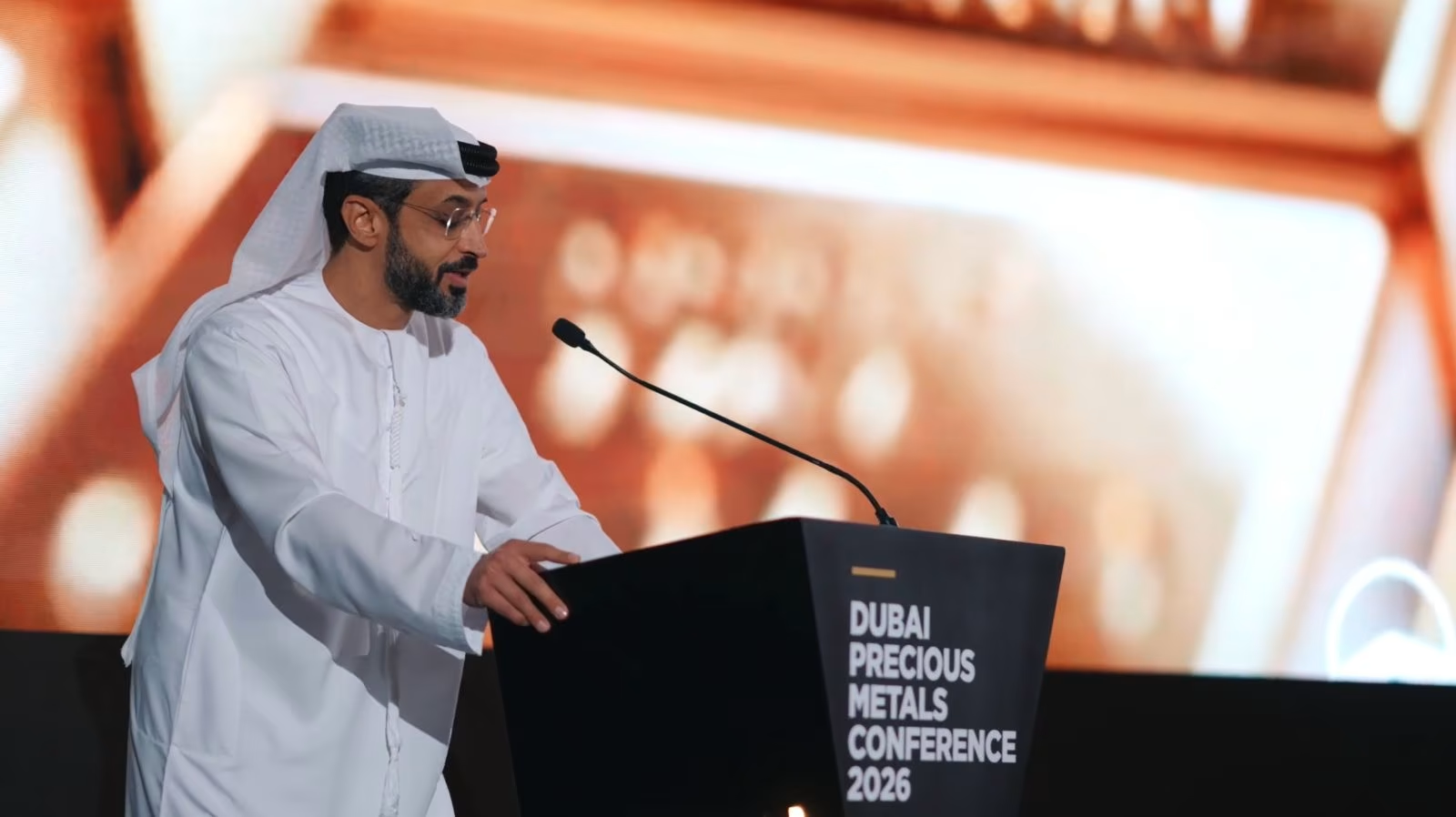
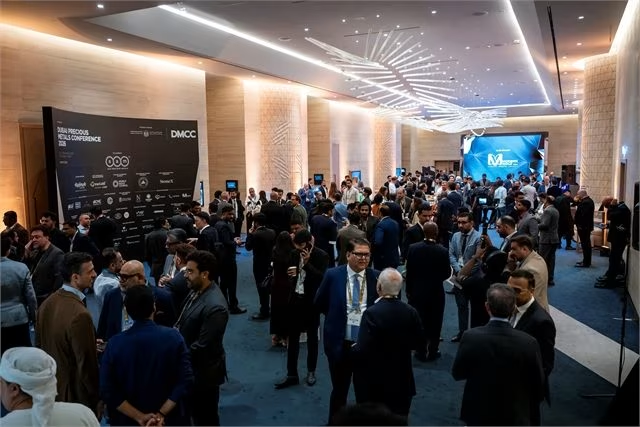
Nearly 800 delegates and 34 speakers met at Uptown Dubai on 16 and 17 November 2026 for the 14th Dubai Precious Metals Conference (DPMC), hosted by DMCC and held under the theme “Reshaping Global Precious Metals Markets”. Over two days, one message came through consistently. The UAE is not positioning itself only as a place where gold changes hands. It is building the policy, infrastructure and standards that shape how the market works.
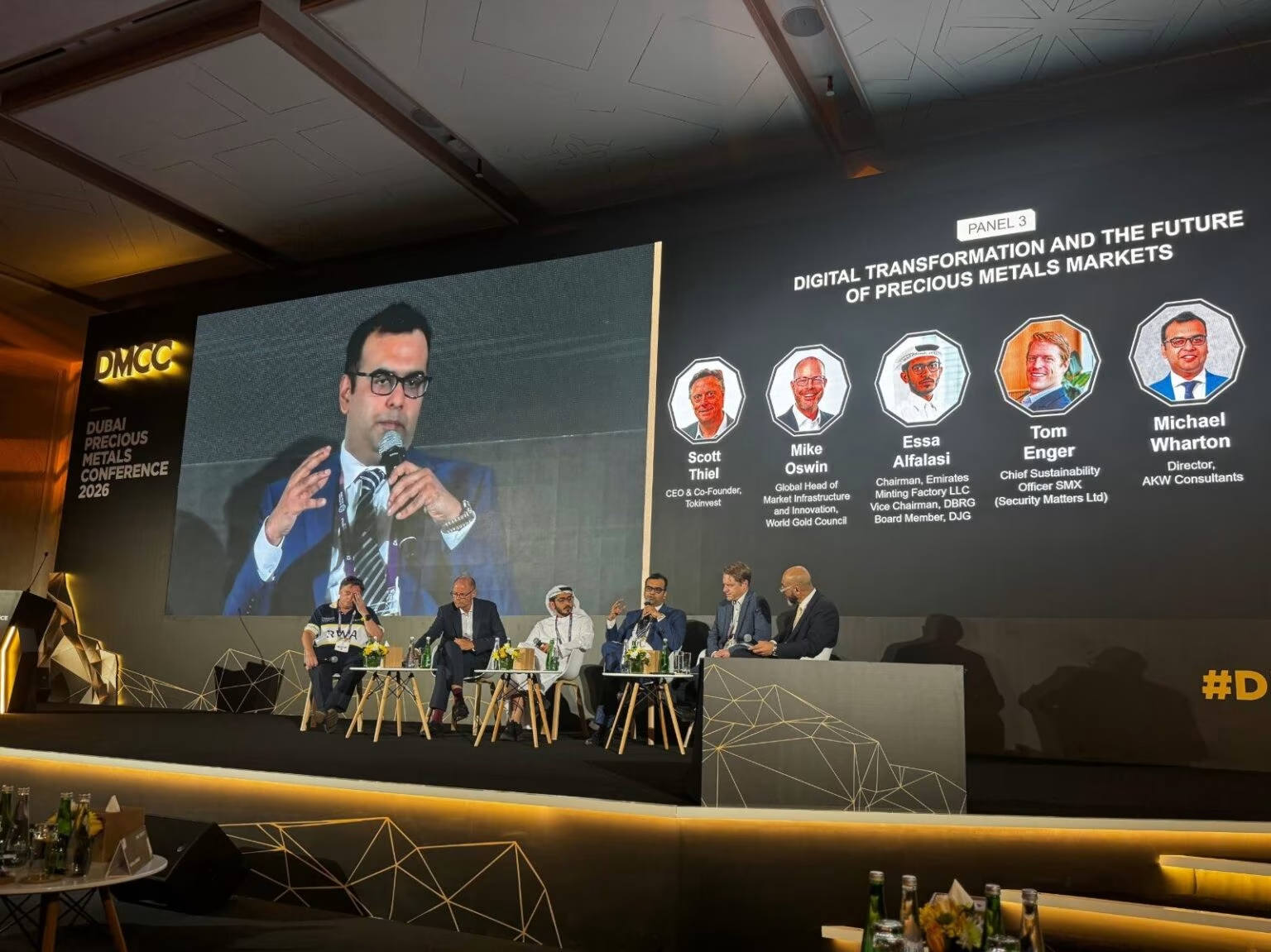
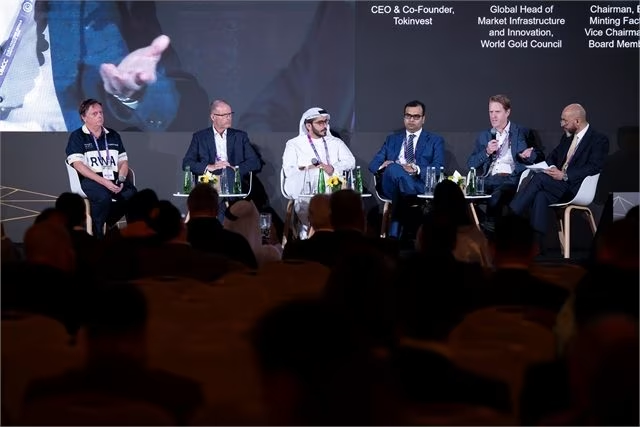
AKW attended, and our Director, Michael Wharton, joined the panel on digital transformation and the future of precious metals markets. Below are six takeaways from the conference, and what each means for businesses operating across the UAE gold value chain.
1. Gold Sits Inside a National Economic Plan
The “We the UAE 2031” vision sets clear targets: doubling GDP to AED 3 trillion, raising non-oil exports to AED 800 billion and lifting foreign trade to AED 4 trillion. The country is already moving ahead of that schedule. Official figures show non-oil exports exceeded AED 813 billion in 2025, and non-oil foreign trade reached around AED 3.8 trillion.
Gold is a material part of that performance. Dubai’s foreign gold trade rose 60 per cent year on year to about AED 1 trillion in 2025, and physical gold trading across the UAE reached around 2,750 tonnes, making the country the world’s second-largest physical gold trading hub (WAM).
What it means: a sector this central to national economic targets attracts closer regulatory attention. Businesses in the gold trade should expect higher standards of evidence, not lower.
2. The Dubai Gold Strategy Is Setting the Direction
In October 2026, the Dubai Supreme Committee of Economic and Financial Affairs reviewed six proposed strategic directions for a Dubai Gold Strategy, covering trading, financing, storage, competitiveness, price discovery, and jewellery and retail demand. The proposed scope runs across the full value chain, from supply and refining through to storage, financing, pricing, digital tokenisation and retail. One direction focuses specifically on advancing traceability and transparency standards. The meeting also approved a committee, chaired by His Excellency Abdulla bin Damithan, to drive the strategy’s implementation.
The strategy is still at the proposal stage. Its structure is already instructive, however. When supply, refining and tokenisation sit inside the same plan as trading and financing, provenance and record-keeping become part of the market’s core design rather than an add-on.
What it means: businesses at every point in the chain, upstream as well as downstream, should expect their sourcing and documentation to be examined as part of the same system.
3. Central Banks Are Reshaping Demand
The keynote address by Isabelle Strauss-Kahn, formerly a senior official at the World Bank and the Banque de France, turned attention to the official sector. She noted that central banks hold 17 per cent of the world’s above-ground gold stock, supported by sustained reserve accumulation since 2021, and that they hold gold as a long-term store of value, a diversifier and a hedge against geopolitical risk.
In a market where official buyers carry this weight, a neutral and trusted centre for trading and storage becomes more valuable. Dubai is positioning itself for that role, and the proposed Gold Strategy explicitly aims to strengthen Dubai as a trusted centre for institutional and sovereign gold storage. That position depends on trust that can be verified, bar by bar.
What it means: institutional demand rewards jurisdictions and counterparties that can demonstrate provenance, not just assert it.
4. The Market Infrastructure Is in Place
The Dubai Gold and Commodities Exchange (DGCX) traded 2.3 million contracts worth more than USD 57.7 billion in 2026, up 32 per cent by volume and 46 per cent by value on 2025. Its Gold Spot T+0 contract, launched on 22 June 2026, has physically settled around 2.4 tonnes of gold from more than 2.6 tonnes traded. The contract is based on 1kg UAE Good Delivery gold and settled in UAE dirhams.
Alongside DGCX, DMCC Vault and DMCC Tradeflow support physical storage, ownership registration and financing, and DMCC is home to more than 1,500 gold and precious metals companies. Trading, clearing, storage and financing now operate within a single connected ecosystem.
What it means: the UAE Good Delivery standard is now built into exchange products. A refinery’s accreditation status has a direct bearing on market access.
5. Standards Are Travelling with the Trade
The Ministry of Foreign Trade pointed to stronger supply chains with mineral-rich economies through the UAE’s Comprehensive Economic Partnership Agreement (CEPA) programme, and to growing international recognition of the UAE Good Delivery standard. The conference opened with a dedicated mining workshop, a clear signal that responsible practice begins at the point of origin.
What it means: as trade corridors with producing countries deepen, due diligence on upstream suppliers carries more weight. Frameworks such as the OECD Due Diligence Guidance remain the practical reference point for that work.
6. Digital Ownership Is Part of the Plan
Tokenisation sits within the proposed scope of the Dubai Gold Strategy, in a jurisdiction that already has a dedicated virtual asset regulatory framework. Digital ownership, provenance and traceability were among the themes the conference addressed.
Michael made a related point on the panel: a gold token is only as good as the bar behind it. Digital ownership adds speed and accessibility. It does not replace the need for verified physical metal, sound custody and accurate reconciliation.
What it means: firms issuing or trading gold-backed tokens need assurance on the physical side as well as the digital side, with both meeting regulatory expectations. Our article on the digital gold ecosystem in the UAE sets out the licensing and structuring considerations in more detail.
What This Means for Your Business
- Refiners: keep UAE Good Delivery accreditation and review readiness current, and make sure supply chain due diligence is documented from origin, especially for material sourced through new trade corridors.
- Traders and bullion dealers: counterparty due diligence and AML/CFT controls under Federal Decree-Law No. 10 of 2025 need to keep pace with trading volumes, and sourcing records should satisfy the requirements of exchanges, vaults and banking partners.
- Digital asset firms: connect the token to the bar. That means clear reserve backing, reconciliation between digital holdings and vaulted metal, and the licensing your structure requires.
Frequently Asked Questions
What is the Dubai Gold Strategy?
It is a proposed strategy, reviewed by the Dubai Supreme Committee of Economic and Financial Affairs in October 2026, to strengthen Dubai’s position as an integrated global gold hub. Its six proposed directions cover trading, financing, storage, competitiveness, price discovery, and jewellery and retail demand.
What is UAE Good Delivery?
It is the UAE’s national standard for gold refineries and the bars they produce. DGCX’s Gold Spot T+0 contract is based on 1kg UAE Good Delivery gold.
What is the DGCX Gold Spot T+0 contract?
It is a same-day, physically settled spot gold contract launched by DGCX in June 2026. It allows participants to execute, clear and settle physical gold on the same day, settled in UAE dirhams.
Is tokenised gold regulated in the UAE?
Gold-backed tokens generally fall under the UAE’s virtual asset regulatory frameworks. The applicable regime depends on the token’s structure and where the issuer operates, so firms should confirm their licensing position before launching or distributing a product.
Conclusion
The thread running through DPMC 2026 was consistent: in the UAE, market growth and market integrity are being built together. As a UAE Good Delivery Reviewer working with refineries, traders and digital asset firms, AKW supports businesses in meeting the standards that this next phase of the market requires, from responsible sourcing due diligence to AML/CFT compliance and digital asset regulation.
To discuss what these developments mean for your business, speak with our team.
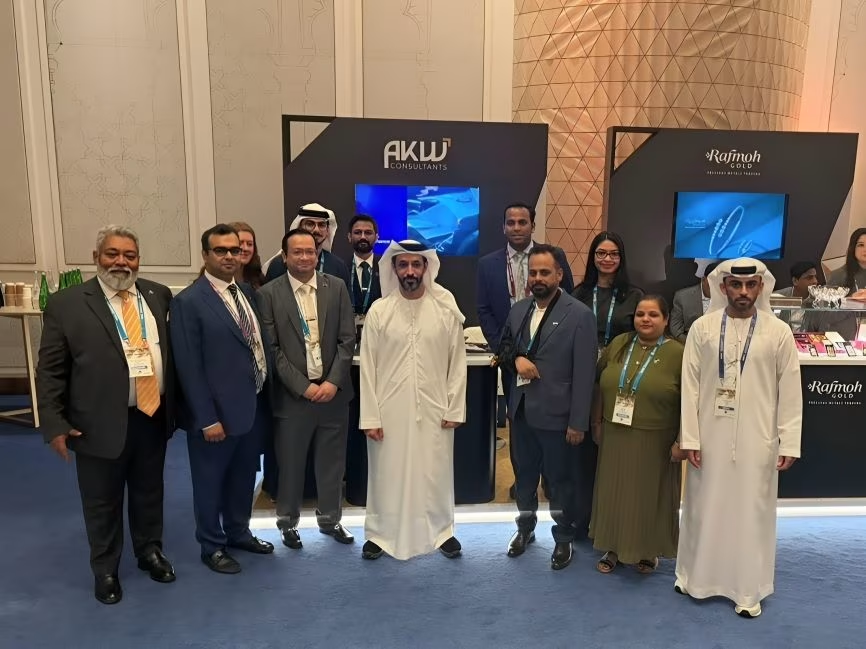
Thank you to DMCC for hosting the conference, and to everyone who took the time to speak with our team.
Sources
- DMCC, DMCC concludes 14th Dubai Precious Metals Conference (17 November 2026)
- WAM, DGCX trading value exceeds USD 57.7 billion in 2026 (17 November 2026)
- WAM, DGCX to launch region’s first regulated Gold Spot T+0 contract (June 2026)
- WAM, Maktoum bin Mohammed reviews Dubai economic and financial indicators and the Dubai Gold Strategy (8 October 2026)
- WAM, UAE non-oil foreign trade in 2025 (31 January 2026)
- Dubai Media Office, We the UAE 2031

Interest-Free Related-Party Loans in the UAE: When Does “No Interest” Become a Tax Issue?
Interest-free funding between related parties is common across UAE groups, but under Article 34 of the UAE Corporate Tax Law it must meet the arm’s length principle. How to benchmark, document and adjust related-party loans.